Portfolio · Bahraich, Uttar Pradesh, India
Hi, I'm Gauri Jaiswal.
|
I'm a first-year B.Tech student in Artificial Intelligence & Machine Learning at Uttranchal University, working toward becoming an AI/ML engineer. My proven experience is in UI/UX design, video editing, and front-end fundamentals — and alongside that, I've been building small, real GenAI experiments: a local-model API, a tool-calling agent, structured reasoning, and a RAG ingestion pipeline. Some of it is polished, some of it is honestly still rough — I'd rather show you exactly where I am than dress it up.
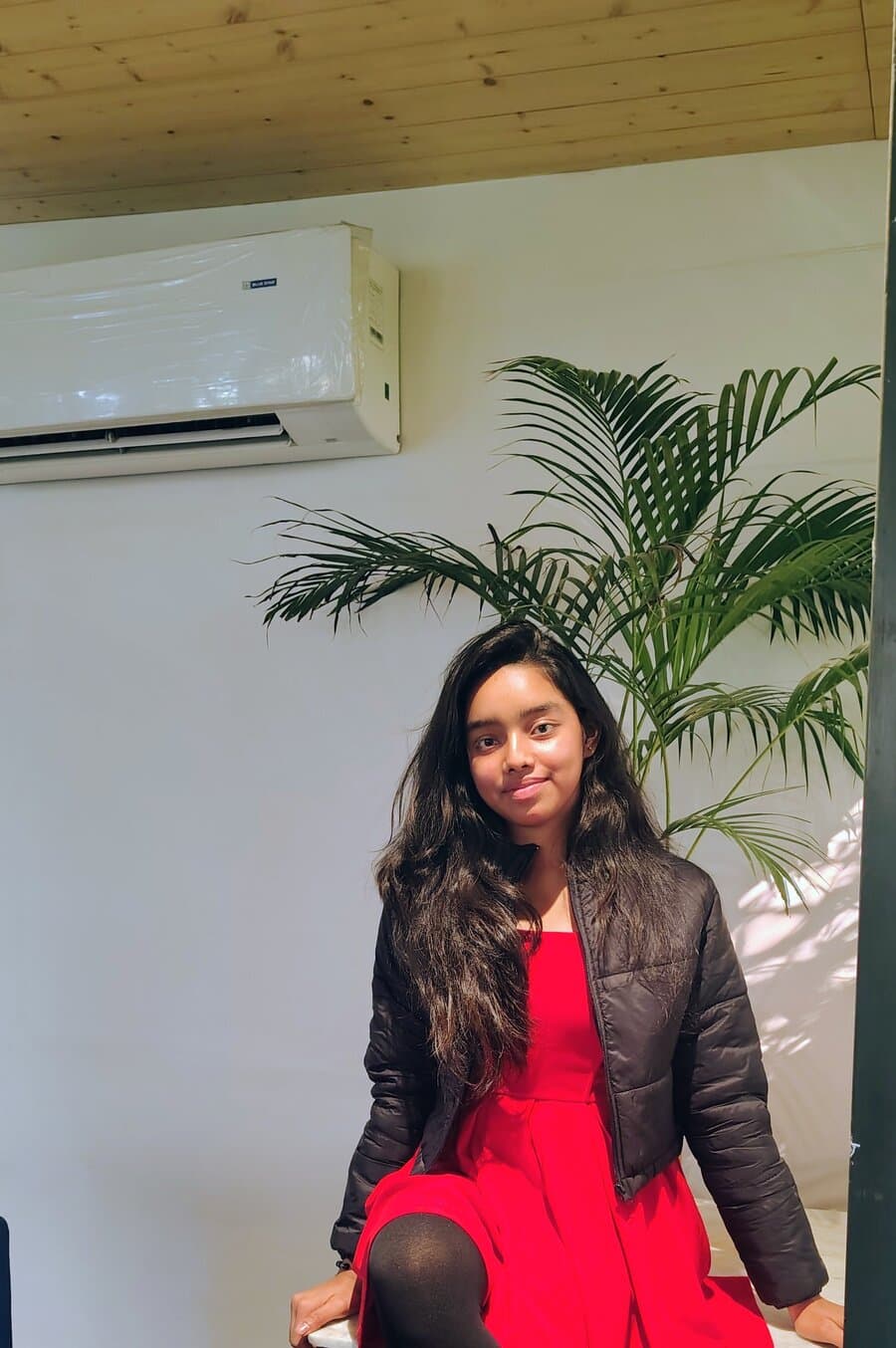
About
Where I am, honestly.
Education
B.Tech, Artificial Intelligence & Machine Learning
Uttranchal University · 2025 – 2029
Languages
English (Fluent) · Hindi (Fluent)
I'm in my first year of a B.Tech in Artificial Intelligence & Machine Learning, and my career goal is to grow into an AI/ML engineering and LLM research role. That goal is still ahead of me — what I have today is a solid design and front-end foundation, built through real client work.
Over a six-month AI Product Design internship at Difmo Private Limited, I designed interfaces for live products, worked directly with clients, and shipped work that real users interact with. Alongside that, I edit video professionally in CapCut and have been teaching myself web fundamentals with HTML, CSS, JavaScript, and React.
On the AI/ML side, I've moved past just reading docs: my GenAI-Projects GitHub repo has working scripts for a local-model API, a tool-calling agent, structured reasoning, and the ingestion half of a RAG pipeline, alongside a couple of experiments that are honestly still buggy. I'm not going to round that up into 'production AI systems' — some of it is small, one script has a known bug — but it's real, running code, and this section grows as more of it comes together.
0mo
Difmo Internship
0
UI/UX Case Studies Shipped
0
GenAI Experiments
0
B.Tech In Progress
Experience
Real client work, not a simulation.
AI Product Design Intern & Video Editor (Freelance)
January 2026 – June 2026 · 6 monthsDifmo Private Limited
- Designed user-friendly, visually clean UI/UX layouts for live client projects, with a focus on usability and accessibility.
- Built wireframes, prototypes, and interface designs in Figma across three products: NextZeni Academy, ToLetForRent, and an internal analytics dashboard (ITBD).
- Worked directly with clients to scope requirements and translate them into design decisions.
- Edited and produced client video content in CapCut — transitions, effects, subtitles, and audio sync.
- Created posters and branding assets aligned with client marketing campaigns, including festival creatives.
- Managed multiple concurrent projects while holding delivery timelines.
Certificate of completion — click to view full size
Real-World Technology Work
Live platforms, not simulations.
Beyond UI/UX design, I've contributed to the technology and website side of real, operational products — working on how they function, coordinating between business needs and technical execution, and solving problems that only show up once something is actually running in the real world.
PressHop
PressHop is a real-world technology platform that brings together AI, field operations, verification, and evidence collection, supported by a large network of local, on-ground personnel — not just a website, but an operational system that has to function in the field.
My involvement
Contributed to the technology and website side of PressHop — working on how the platform functions and holds up in practice, not only how it looks. That meant thinking beyond visual design to how a distributed, field-based operation actually uses the platform day to day, and helping bridge what the operations side needed with what the technology could deliver.
- Technical coordination and website/product execution for a live, operational platform
- Real-world problem solving for a system that has to work reliably in the field, not just on screen
- Translating on-ground and operational requirements into practical digital solutions
- Supporting website functionality, usability, and day-to-day digital workflow
What this demonstrates
Exposure to a genuine, operational technology product involving AI and field operations — the ability to work across technology, product thinking, and on-ground realities at the same time.
Sajjad Husain Law Associates
Sajjad Husain Law Associates is a technology-driven legal services platform that pairs a professional legal practice with structured digital resources — High Court and Supreme Court information, legal articles, bare acts, case-related information, and multiple legal practice areas.
My involvement
Contributed to the technology and website side of the platform — supporting how a professional legal service organizes and presents a large amount of structured legal information online, and helping the digital side of the business run reliably alongside the legal practice itself.
- Technical coordination for a professional/legal services platform
- Supporting website functionality and organization across multiple legal information sections
- Understanding how technology can support a professional service business, not just represent it visually
- Troubleshooting and improving day-to-day digital workflow
What this demonstrates
Experience working with a technology-driven professional services business, and the ability to support a real client's digital presence beyond visual design.
Generative AI Engineering
Hands-on GenAI experiments — real code, not a roadmap
The scripts below are all from my GenAI-Projects GitHub repo — real, running code, not a roadmap. Some are small and complete; a couple are honestly unfinished, and I've labeled those as experimental rather than dressing them up. LangGraph and a full end-to-end RAG app (retrieval + generation, not just ingestion) aren't in there yet — that's still ahead of me.
Local LLM API
WorkingServe a locally-hosted open-weight model through a clean HTTP API instead of calling a hosted provider.
Architecture & what I learned
FastAPI app exposes a POST /chat endpoint. On startup it pulls a model (gemma3:1b) into a local Ollama runtime, then forwards each request's message to the local model and returns the response.
Features
- Single POST /chat endpoint accepting a message body
- Local model inference via Ollama — no external API calls
- Model pulled and managed programmatically at startup
Concepts demonstrated
Self-hosted inference, API design with FastAPI, Local vs. hosted model tradeoffs
How self-hosted inference differs from calling OpenAI/Gemini — no per-token cost, but you own the runtime and model management.
Tool-Calling AI Agent
WorkingBuild an agent that reasons step by step and decides when to call external tools rather than answering directly.
Architecture & what I learned
A plan → action → observe → output loop. The model is constrained to strict JSON output at each step; when it emits an 'action' step, the corresponding Python function actually runs and its result is fed back in as an 'observe' step before the loop continues.
Features
- Weather lookup tool via a live API (wttr.in)
- A second tool for running allow-listed shell commands (ls, pwd, whoami) — deliberately restricted, not open shell access
- Multi-turn control loop that keeps calling the model until it reaches a final 'output' step
Concepts demonstrated
Agentic tool-use, Structured output constraints, Multi-step reasoning loops
Getting an LLM to reliably emit parseable JSON across multiple turns is harder than it looks — most of the iteration (visible in the repo's history) went into tightening the prompt rules, not the tool logic itself.
Structured Reasoning Assistant
WorkingForce a model through explicit, inspectable reasoning steps instead of jumping straight to an answer.
Architecture & what I learned
A system prompt requires the model to move through analyse → think → output → validate → result as separate JSON-formatted turns, one at a time, with the conversation history replayed on every call.
Features
- Strict per-step JSON schema enforced via the system prompt
- Each reasoning step printed separately before the final answer
- Uses OpenAI's JSON response-format mode to reduce malformed output
Concepts demonstrated
Chain-of-thought prompting, JSON-constrained generation, Prompt engineering
How much prompt structure actually changes model behavior — the step-by-step schema visibly slows the model down into more deliberate answers on multi-step problems.
RAG Ingestion Pipeline
Partial — ingestion onlyBuild the document-ingestion half of a retrieval-augmented generation pipeline: load a document, chunk it, embed it, and index it for later retrieval.
Architecture & what I learned
PyPDFLoader reads a PDF, RecursiveCharacterTextSplitter chunks it (1000 chars, 200 overlap), OpenAI's text-embedding-3-large embeds each chunk, and QdrantVectorStore indexes the vectors into a Qdrant collection running via Docker.
Features
- PDF loading and recursive chunking with overlap
- OpenAI text-embedding-3-large for vector generation
- Qdrant vector store indexing via Docker Compose
Concepts demonstrated
Document chunking strategy, Embeddings, Vector databases
This file only covers ingestion — there's no retrieval or answer-generation step yet, so it's honestly a partial pipeline rather than a working RAG app. The natural next step is a query-side script that embeds a question and retrieves against this same collection.
Persistent Agent Memory
ExperimentalGive a conversational agent long-term memory that persists across sessions, combining a vector store and a graph store.
Architecture & what I learned
Uses the mem0 library configured with OpenAI for embeddings/LLM calls, Qdrant as the vector store, and Neo4j as a graph store for relational memory, wrapped around a basic chat loop.
Features
- Dual-store memory config (vector + graph) in one mem0 setup
- Per-user memory scoping via a user_id
Concepts demonstrated
Long-term agent memory, Vector + graph hybrid storage
This one is genuinely unfinished — there's a bug in how the OpenAI client reads its API key, so it's marked experimental rather than working. Worth noting: the API keys in this repo were originally hardcoded in plaintext and have since been moved to environment variables — a real fix, not just a portfolio talking point.
Multi-Provider LLM Calls
WorkingGet hands-on with more than one hosted LLM provider's API surface.
Architecture & what I learned
Minimal direct API calls to OpenAI's chat completions endpoint and Google's Gemini endpoint, run independently.
Features
- Basic OpenAI chat completion call
- Basic Gemini generate_content call
Concepts demonstrated
API surface comparison across providers
The request/response shape differs enough between OpenAI and Gemini that provider-agnostic code needs a thin abstraction layer — which LangChain is largely solving in the RAG script above.
Tokenization Exploration
WorkingUnderstand how text is actually tokenized before it reaches a model.
Architecture & what I learned
Encodes and decodes sample text using the gpt-4o tokenizer and inspects vocabulary size and token IDs directly.
Features
- Encode/decode round-trip
- Vocabulary size inspection
Concepts demonstrated
Tokenization, How context windows are actually measured
Token count isn't word count — seeing the actual integer IDs made prompt-length and cost estimation concrete instead of abstract.
Featured Work
UI/UX case studies
Two products I designed end-to-end during my internship at Difmo — shown with the actual screens, not placeholders. Click any preview to view it full-size.
NextZeni Academy
A skill-driven learning platform for communication training, English fluency, and interview readiness — designed end-to-end in Figma for Difmo's client NextZeni.
My role & process
Started from the client's brief — a communication-skills academy needing to feel trustworthy and outcome-focused — then designed a clear four-step user journey so a first-time visitor immediately understands how the platform works before being asked to enroll.
Challenge
The course catalog spans multiple skill categories (communication, English fluency, interview prep) that needed to feel organized rather than overwhelming on a single page.
What I learned
Practiced structuring information hierarchy for an audience that isn't tech-first — prioritizing clarity and trust signals over visual complexity.
Responsibilities & outcome
- Designed the full site flow: hero, course categories, 'How It Works', and testimonials.
- Built the four-step onboarding pattern (Browse & Choose → Enroll & Access → Learn at Your Pace → Complete & Certify).
- Created reusable UI patterns for course cards and step indicators.
- Collaborated with developers to hand off designs for build.
Outcome: Delivered a learner-centric layout with a scannable course-category grid and a simple 4-step explainer, handed off to development for the live build.
ToLetForRent
A rental marketplace connecting property owners and tenants — rooms, flats, PGs, and offices — designed for clarity and fast, location-based search.
My role & process
Focused on reducing the number of steps between 'I need a place to live' and 'I found one to contact' — built around a search-first homepage and a map-based property explorer.
Challenge
Rental search naturally comes with a lot of filters (location, price, property type). The goal was making that feel like a guided search rather than a form to fill out.
What I learned
Learned to balance information density with visual calm — rental listings need a lot of data (price, size, location) shown at a glance without feeling cluttered.
Responsibilities & outcome
- Designed the property discovery flow: search, filtering by location and price range, and listing detail screens.
- Designed the tenant-owner direct communication pattern for enquiries.
- Created the trust-building homepage section (community stats, testimonials).
- Designed for both web (tablet/desktop) and mobile app layouts.
Outcome: Shipped a listing and search experience covering rooms, flats, PGs, and rental homes, with location-based results and a simplified enquiry flow between owners and tenants.
Also Built
Smaller, self-directed projects
A weather app built with live API integration for real-time conditions — her first hands-on project working with an external API and frontend data flow.
- Implemented data fetching from a live weather API.
- Built a clean, fully responsive interface.
- First project handling asynchronous data and API error states.
An analytics dashboard UI design exploring information hierarchy and reusable dashboard components — confirmed public repo on GitHub (HTML/CSS).
- Designed dashboard layout patterns focused on scanability.
- Explored reusable card and chart components.
Verified live on GitHub (HTML 44% / CSS 56%) — screenshots to be added once shared.
View sourceGitHub
Repository highlights
Project Demonstrations
Watch a demo
Independent from the UI/UX case studies above — these are video-editing reels, hosted on Google Drive. Each opens in a new tab.
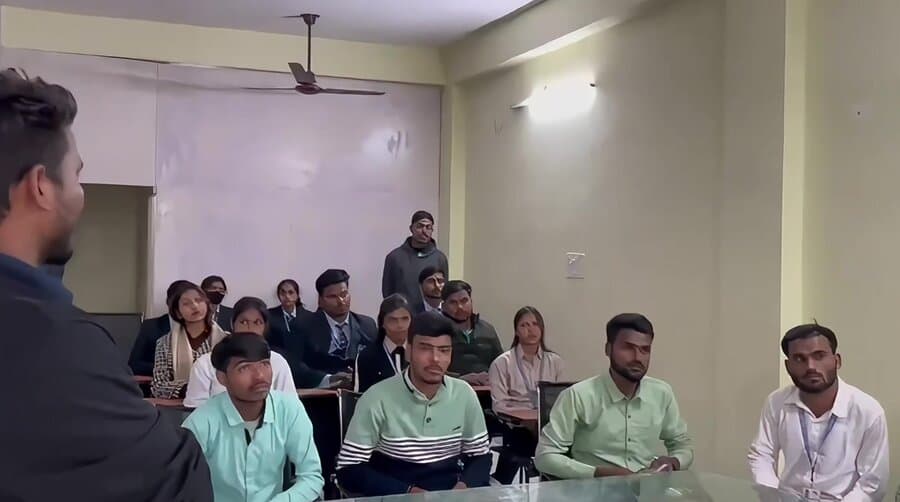
Professional Project Demo
A professional, client-facing video edit showcasing pacing, transitions, and audio sync in CapCut.
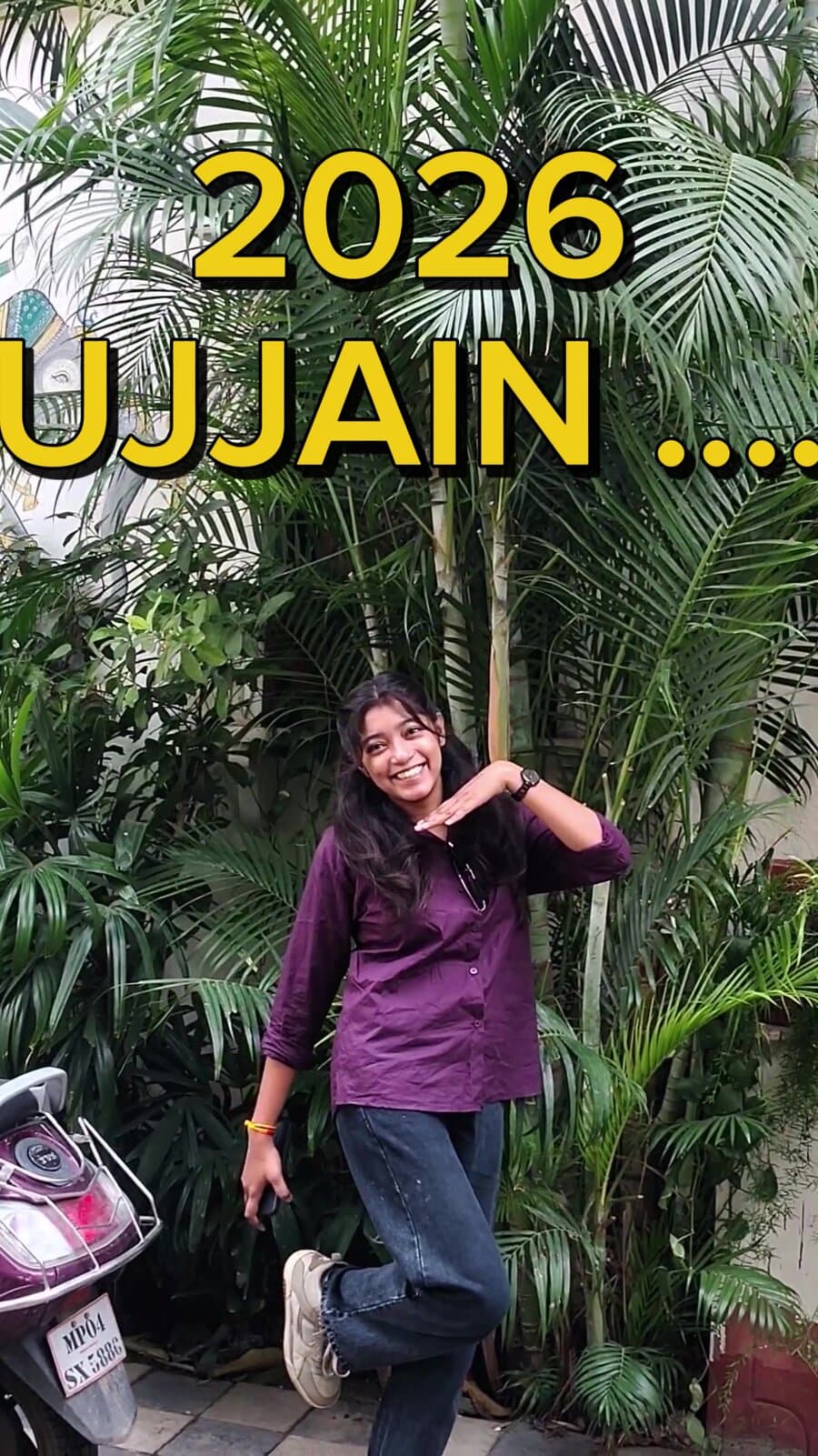
Family Fun Video
A personal, lighter edit with on-screen text, music sync, and color grading — creative editing outside client work.

Festival Campaign Poster — Difmo
Branding creative designed for Difmo's Holi campaign, combining brand identity with a festive, celebratory tone.
Skills
What I can do today — and what I'm building next
I keep this split on purpose. The badges below are things I've actually shipped. The learning list is real progress, not finished expertise — I'd rather you know exactly where I stand.
Design
Web Foundations
Languages
GenAI Tools
Creative
Tools
Currently learning
Beyond the AI/ML engineering journey above, here's what else is actively in progress.
Timeline
Milestones so far
January – June 2026
Difmo AI Product Design Internship
Completed a 6-month AI Product Design internship at Difmo Private Limited, certified by the company.
2026
NextZeni Academy — Shipped Design
Designed the full UI for NextZeni Academy's learning platform, handed off for development.
2026
ToLetForrent — Shipped Design
Designed the rental marketplace experience for ToLetForRent across web and mobile.
2025 – 2029
B.Tech AI/ML — In Progress
First-year student at Uttranchal University, building foundations for an AI/ML engineering career.
Why Work With Me
How I work
Client Communication
Comfortable scoping requirements directly with clients and translating them into design decisions.
Fast Learner
Picked up Figma, video editing, and front-end tools independently while balancing coursework.
Design Craft
Detail-oriented in layout, spacing, and usability — not just visuals.
Honesty About Skill Level
Clear about what's shipped versus what's still in progress, so collaborators know exactly what they're getting.
Consistency
Managed multiple concurrent client projects at Difmo without missing delivery timelines.
Growth Mindset
Actively building toward AI/ML engineering, one real skill at a time.
Let's talk
Open to internships, freelance design work, and early AI/ML opportunities.
If you have design work, or you're building something in the AI space and want a fast-learning collaborator, I'd love to hear from you.